
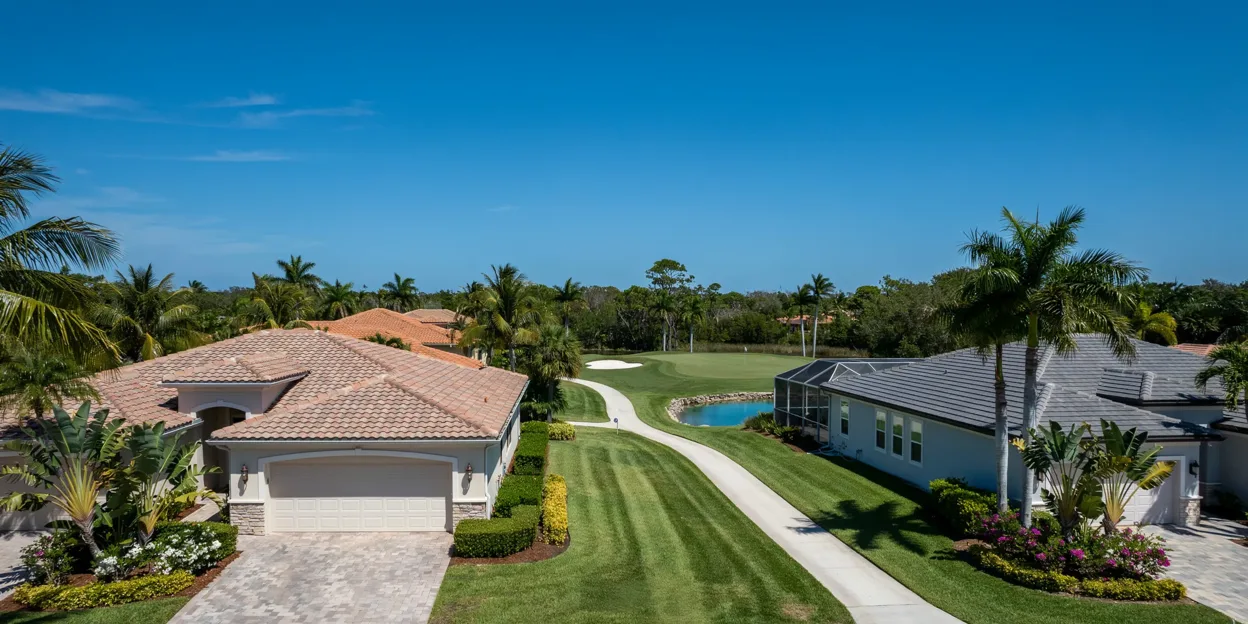
Fort Myers Beach is Estero Island, seven miles of barrier island between the Gulf and Estero Bay. On September 28, 2022, Hurricane Ian pushed ten to fifteen feet of surge across it and destroyed roughly nine hundred buildings. The cottages and 1950s block homes at the north end near Times Square largely went. What is being rebuilt is elevated, and most of it carries metal or tile roofing installed to the current Florida Building Code.
The roofs that survived sit on the stronger concrete buildings and the homes farther down Estero Boulevard. Many kept their structure but lost tile or shingle, and the salt water that sat inside them for hours reached the trusses. Helene's surge in September 2024 and Milton two weeks later tested the repairs.
Fort Myers Roofers connects Fort Myers Beach owners with an independent local roofing contractor who works on the island.
A survivor home with a stain that showed up after Ian is a roof repair question with an attic check, since salt-soaked decking fails from below. A rebuild or a roof going onto a repaired structure is a roof replacement with flood-zone and elevation rules on top of the roofing permit, and the choice of metal or tile for a Gulf-front exposure is on the roofing materials page. Every roof here should be specified with marine-grade fasteners.
The town runs its own permit office. A roof permit on the island goes through the Town of Fort Myers Beach Building Services division, where applications are submitted electronically and contractors must hold a state license. A roof on a home that was substantially damaged by Ian is reviewed under the town's flood-damage rules as well. On the bay side, the Mound House on Connecticut Street, the island's oldest standing structure, came through the storm and reopened.
Call (239) 306-8745 to be connected with a local roofing contractor serving Fort Myers Beach.
A leak, lifted shingles, or cracked tiles traced to the source and fixed before the next rain band reaches Lee County.
Tear-off to the deck, new underlayment, and a new roof permitted and inspected under the Florida Building Code.
Tarping and repair after wind, tornado, or hurricane damage, with photos taken before anything is covered.
A walk of the roof and attic with written findings for a sale, an insurer, or a roof that is past year fifteen.
Barrel tile, architectural shingle, standing-seam metal, and low-slope membrane compared for Southwest Florida sun, salt, and wind.
What to photograph, what a contractor's written scope gives the adjuster, and the Florida deadlines that apply.